What is the structure of personality? Is it simply the product of interactions between an individual and the situational context, or are there traits that are biologically rooted? If so, which traits are “fundamental” and which ones are derived from the interaction of more basic ones? How do environmental, experiential, and cultural influences modify the brain to shape an individual's personality, and how do these influences interact with genetic factors? What is the mechanism by which genes influence our personality? What does this say about our ability to change our personality? Is there a causal link between the maturation of the brain and the development of personality? Are there biological markers that reveal susceptibility for, or resilience to, psychopathology in response to emotional trauma? If so, does this knowledge lead to new preventative or therapeutic clinical approaches?
These are the questions that inspire work in the CanliLab.
Our Approach
Our approach is to operationalize personality as individual differences in various domains of psychological function, such as attention, working memory, impulse control, and facial emotion recognition. We then use cognitive-affective tasks developed by cognitive neuroscientists and in our own laboratory to study how individual differences in task performance are reflected in individual differences in brain activation.
Our Toolkit
fMRI
BrainBlobs!
The Yale MR Imaging Research Center
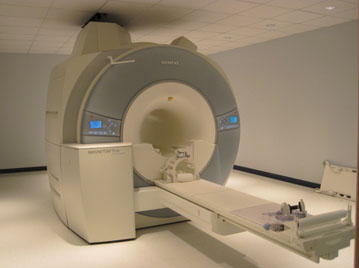
Functional magnetic resonance imaging (fMRI) makes use of the physical properties of electromagnetic fields to allow investigators noninvasive imaging of brain activation in healthy human volunteers. We collect fMRI data using a Siemens Trio Scanner, located in the Yale MR Imaging Research Center at Yale University Medical School, in collaboration with our colleague Todd Constable, Ph.D.
TMS
The MagStim Super Rapid
Application of TMS through a Figure-8 coil
Our lab uses a Magstim Super Rapid system (Magstim Website), shown above, to conduct studies using transcranial magnetic stimulation (TMS). Transcranial magnetic stimulation is a critical complement to fMRI: fMRI can identify regions that are active during a particular task, but cannot determine if a given activation is functionally necessary to accomplish the task. In order to show that a brain structure is necessary for a particular task, one needs to demonstrate that temporary interference with processing in that structure also interferes with task performance. TMS can serve this purpose.
TMS uses rapidly alternating magnetic fields in a hand-held coil that is held on the scalp (i.e., no actual contact is necessary). The magnetic field passes through the skull and into the brain where it induces small currents in the cortex that can affect cognitive processing during a task. Small induced currents can then make brain areas below the coil more or less active, depending on the settings used. In practice, TMS can influence many brain functions, including movement, visual perception, memory, reaction time, speech and mood. The effects produced are genuine but temporary; lasting only a short time after actual stimulation has stopped.
Genotyping

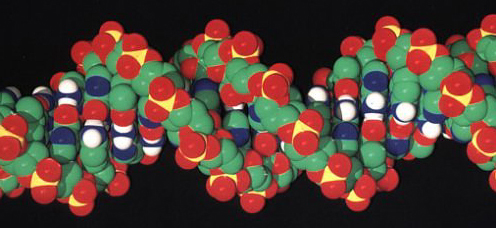
We established a productive collaboration with one of the world's leading molecular psychiatrists, Dr. Klaus-Peter Lesch in Wuerzburg, Germany. Dr. Lesch's laboratory was the first to report an association between neuroticism and individual differences (polymorphisms) in the regulatory region of the serotonin transporter gene in a 1996 Science article. In collaboration with Dr. Lesch, we have now genotyped approximately 100 subjects for a number of gene polymorphisms. These participants have been tested in about a dozen behavioral studies which are currently being analyzed.
We are now in the process of starting up genotyping in-house. Our molecular lab is located within the molecular cloning facility in the Life Sciences Building st Stony Brook University.
The integration of genetic and brain mapping approaches opens an exciting chapter in psychology and neuroscience, because it will generate data to formulate theories about the molecular mechanisms underlying individual differences in behavior.